[Case 34] Food Deserts and Ageing in Place: When Grocery Access Becomes a Rights Issue
작성자 ADMIN
날짜 2026-03-19 10:58:11
조회수 1660
Food Deserts and Ageing in Place: When Grocery Access Becomes a Rights Issue
The grocery gap: Cities vs. shrinking communities
In cities, “What should we eat?” is part of the everyday routine—rarely a serious question. An empty fridge can be filled within an hour, and real-time price comparisons and discount alerts are increasingly taken for granted. But as urban grocery shopping becomes a one-click routine—powered by overnight delivery, on-demand services, and a growing array of subscriptions—older residents in rural and other shrinking communities face a very different calculation. For them, a routine grocery trip can become an all-day undertaking that requires weighing the weather, their energy levels, and the availability of transport.
“Food Deserts” in Korea: Definition and scale
Concerns about food accessibility have long been discussed under terms such as “food deserts[1]” and “shopping refugees”—people effectively cut off from everyday grocery retail. A food desert
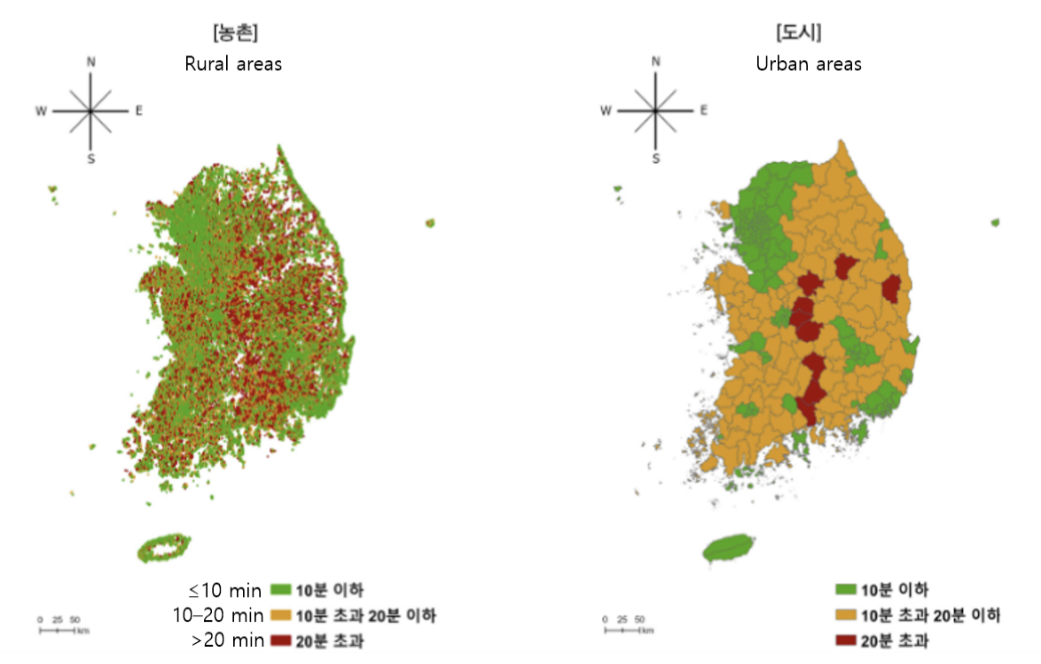
Figure 1: Food Desert Distribution in Korea (2024), Nationwide[2]
is commonly defined as an area where it takes more than 10 minutes by car to reach a retailer that sells fresh foods such as meat, vegetables, fruit, and dairy. Convenience stores and gas-station outlets, which tend to stock mostly processed items—are typically excluded from this definition.
Japan’s Ministry of Agriculture, Forestry and Fisheries (MAFF) has highlighted food deserts since the 2000s. It defines “shopping-disadvantaged” older adults as those aged 65 and above who live more than 500 meters from a store and cannot easily rely on a car, and has designed support measures for this at-risk group.
Korea, too, reveals a sharp divide. Across the country, residents in 73.5% of village-level administrative units (ri)[3] are reported to struggle with grocery shopping simply because there is no nearby food retailer. A 2024 survey on travel time to grocery stores found that, by car, people living in myeon (rural townships) take about 3.7 times longer on average to reach a grocery store than urban residents. Yet the disruption created by these retail “voids” in rural eup–myeon communities—felt most sharply by older people—often goes unnoticed, overshadowed by the surplus of choice in cities.
Why food access is a rights issue
Food access should not be treated merely as a matter of convenience. It must be addressed as a matter of rights. The UN Principles for Older Persons affirm older people’s right to access adequate food, water, housing, and healthcare. General Comment[4] No. 12 on the International Covenant on Economic, Social and Cultural Rights (ICESCR) explains the right to adequate food as encompassing both availability and accessibility—taking into account affordability as well as the costs of mobility. General Comment No. 14 further states that realizing the right to health goes beyond healthcare services and includes ensuring access to safe food and adequate nutrition, explicitly identifying food access as a foundational condition for health.
For older people, grocery shopping is more than a transaction. It is a socially embedded form of self-determination—one that connects individual choices to the community. That is why it matters for ageing in place—staying in one’s own home and community, rather than entering institutional care. Deciding what to buy, comparing prices, stopping to greet a neighbor: these small routines sustain autonomy, social contact, and the cadence of daily life. When food access narrows, isolation and reliance on others can deepen, and the foundations of a dignified life begin to erode.
”Dongnak Jeombbang[5]” and the “Haengbok Jangteo” (Happiness Market): How communities rebuilt local retail infrastructure
When food access fails at the market level, the next question is who fills the gap—and how. In many places, solutions have been taking shape quietly and pragmatically. One of the clearest examples is the Dongnak Jeombbang Social Cooperative in Myoryang-myeon, Yeonggwang County, South Jeolla Province.
After the last small neighborhood shop in Myoryang-myeon shut down in 2010, a local community group, Yeomin Dongrak Community[6], set out to do more than deliver aid. Their goal was to rebuild the area’s retail lifeline. That effort gave rise to Dongnak Jeombbang. Launched in 2011, the cooperative now has roughly 400 members. Twice a week, a mobile market—run from a retrofitted one-ton truck—loops through 42 hamlets across Myoryang-myeon. The route can span 40 to 60 kilometers in a day, but the truck lingers 20 to 30 minutes in each stop. In that short window, it becomes more than a place to buy goods: it becomes a place to talk, check in, and exchange news.
Importantly, Dongnak Jeombbang is not run as a rationing scheme. Residents browse, compare, choose, and pay—preserving the dignity and agency that come with shopping. For people with limited mobility, the cooperative also delivers fresh food in insulated bags directly to the doorstep. If a regular customer stops buying items they usually purchase, staff will check in; when needed, they coordinate with local welfare centers. Some reports indicate that this system has helped identify risks of solitary death in time to intervene. The cooperative’s work extends further—supporting community-meal programs at village halls, managing supplies, assisting with administrative and accounting tasks for village events, and offering small-scale daily-life support. Taken together, it functions as both a distribution network and a community watch infrastructure—helping older residents stay independent while reinforcing the area’s informal safety net.
Another example is the Haengbok Jangteo (Happiness Market) operated by the Soheul Agricultural Cooperative (Soheul Nonghyup) in Pocheon since 2019. The program is a mobile market that visits rural villages where supermarkets are distant and transportation is limited. Using vehicles such as modified 3.5-ton trucks, the cooperative brings daily necessities, groceries, and locally produced farm and livestock products directly to residents, sparing them long trips for basic needs. It also bundles practical services—collecting utility payments, taking phone orders, and arranging deliveries—earning strong approval, particularly among older residents with limited mobility. Some villagers reportedly keep using the market even when they could travel to a fixed-location store, out of concern for the program’s sustainability. And when the truck rolls up to the village hall with trot music playing, it signals more than a shopping stop: it has become a familiar, close-to-home service and a small social hub where neighbors gather and talk.
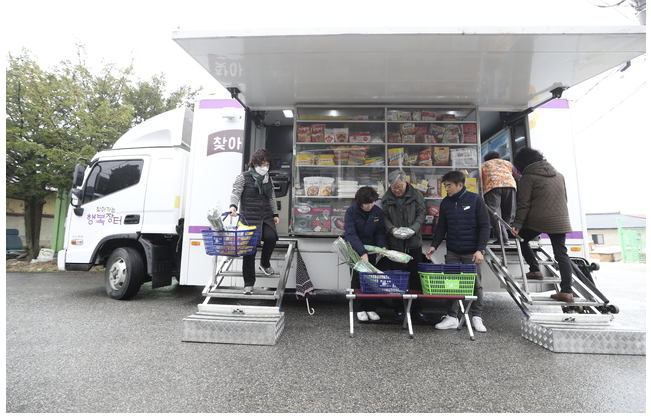
Photo 1: Haengbok Jangteo in operation. (Source: The Farmers Newspaper)
Global responses to food deserts
Food desertification is not a niche problem confined to a handful of countries. It is a widespread infrastructure challenge that emerges where ageing, poverty, and regional inequality intersect.
In France, the model of Épiceries sociales et solidaires—often translated as “solidarity grocery stores”—has taken hold nationwide. These stores allow low-income and vulnerable households to shop in a normal retail setting, paying only a fraction of the usual price (often around 10–30%) for groceries and everyday essentials, including hygiene and household items. Here again, the emphasis is not on passive distribution but on preserving the customer’s right to choose. When needed, the stores also links shoppers to broader social support, such as counseling, accompaniment services, and practical assistance.
Japan’s well-known mobile market, Tokushimaru, partners with local grocers for supply and delivers hundreds of items by small trucks along fixed routes, typically visiting older households once or twice a week. Users pay a modest service fee added to the price of goods (often JPY 10–20, roughly KRW 100–200), which helps cover fuel and operating costs. Before launching in a new area, Tokushimaru assesses demand carefully; where usage falls short but the need is clear, local governments sometimes step in with subsidies to keep routes running. Like Dongnak Jeombbang, it doubles as a quiet check-in system: routine visits make it easier to notice warning signs, and staff can alert local authorities or family members when concerns arise. With more than 1,000 trucks nationwide—supported by standardized manuals and data systems—Tokushimaru is widely regarded as one of the most advanced mobile retail networks of its kind.
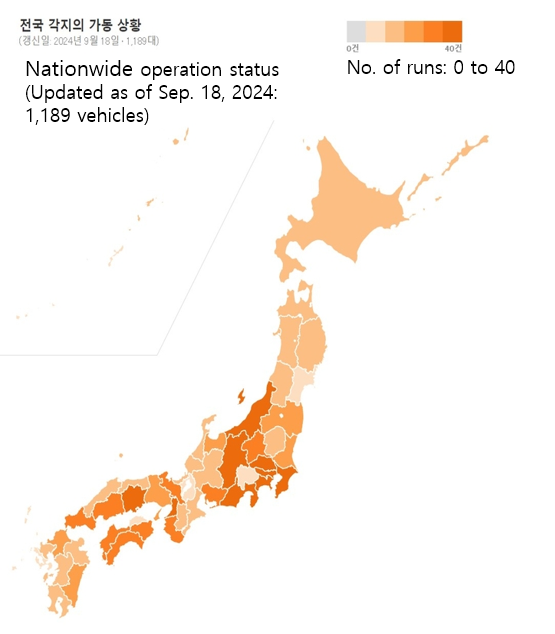
Figure 2: Nationwide operation status of Tokushimaru trucks as of 2024. (Source: Tokushimaru (official website); via Chungbuk Ilbo)
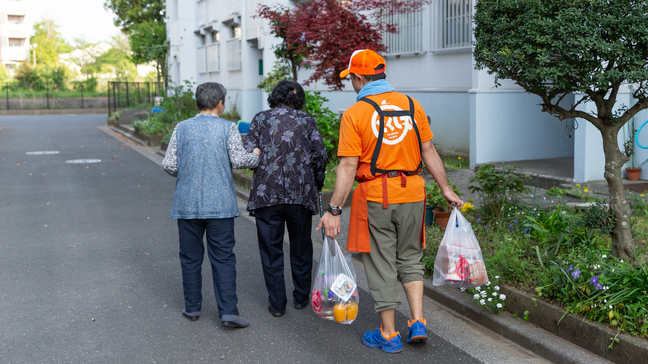
Photo 2: A Tokushimaru driver delivers groceries to a resident’s doorstep. (Source: Tokushimaru (official website); via Chungbuk Ilbo)
In the United States, food deserts have been tackled through programs such as the Healthy Food Financing Initiative (HFFI) and a range of tax incentives. HFFI uses federal grants, loans, and technical assistance to encourage supermarkets, farmers’ markets, and other healthy-food outlets to open in underserved areas, helping reduce high upfront costs and perceived risk. The City of Baltimore, Maryland, for instance, has offered property-tax reductions to attract supermarkets into low-income neighborhoods.
“Gagahoho” Rural Mobile Market: A public model that addresses the viability gap
A recurring challenge for mobile retail in food desert areas is simple economics: profitability. One recent illustration comes from BGF Retail, a major Korean convenience-store operator. From December 2024 to January 2025, the company piloted a mobile store that visited four villages in Jinan County and Imsil County, North Jeolla Province, once a week. The truck sold everyday groceries—instant noodles, snacks, beverages, meat, vegetables, and other essentials. Project staff noted that operating a mobile market comes with heavy fixed and variable costs, including fuel, labor, and inventory disposal. With relatively low spending per customer, structural losses are difficult to avoid. They pointed to a clear takeaway: for mobile retail to last, it must be linked to public subsidy mechanisms that can absorb part of the cost burden and make the model viable beyond short-term pilots.
An encouraging shift is that food-desert response is increasingly being brought into the realm of public service, rather than treated as a private experiment. Since July 2024, the Ministry of Agriculture, Food and Rural Affairs (MAFRA) has been rolling out the “Gagahoho” Rural Mobile Market Program, named for a Korean phrase meaning “household by household.” If Dongnak Jeombbang and Haengbok Jangteo grew from local initiative, Gagahoho represents an attempt to bring food access into the mainstream of rural policy.
The program is delivered through four operating models[7], built in partnership with local governments, regional agricultural cooperatives, village enterprises, and social enterprises. MAFRA provides special-purpose vehicles, selected equipment, and consulting support, while local governments coordinate day-to-day operations with local partners such as Nonghyup Hanaro Mart and other retailers, including staffing and route management. The initiative is designed to go beyond mobile retail alone. Depending on local conditions, municipalities can add shuttle services that take residents from villages to fixed-location stores, or bundle the market with other services—from welfare support to cultural programming and care services. MAFRA plans to expand the program gradually across 113 cities and counties nationwide.
In parallel, MAFRA is advancing the “Rural Community Recovery and Expansion of Socioeconomic Services” agenda (National Agenda Task No. 70) through its Rural Care Service Activation Support Program. The ministry plans to scale up support in 2026 for social and solidarity economy organizations that provide essential services in underserved rural areas.
From pilots to policy
If food deserts are treated as a welfare issue alone, responses tend to stop at short-term subsidies and one-off pilot projects. Yet food access is a precondition for older residents to remain in their communities—and for communities themselves to remain livable. In that sense, it is inseparable from Korea’s demographic pressures, including metropolitan overcrowding and regional decline. Because food access sits at the intersection of health, care, transportation, and local economies, it calls for long-term, integrated policy design—where human rights protection, demographic strategy, and balanced territorial development meet.
Against this backdrop, the National Assembly Research Service (NARS) published a report in December 2025 proposing policy options to address food desertification and declining food access. The report argues that food deserts are not simply a matter of distance, but represent a form of structural vulnerability that shapes health and quality of life for older households in eup–myeon areas. It sets out five policy tasks: △ designing food-support measures aligned with public systems that deliver everyday services; △establishing a dietary-care–based food environment policy that reduces service gaps and minimizes blind spots; △running community-based diet-care programs grounded in health and nutrition management; △shifting mobile markets toward sustainable operating models; △developing and tracking indicators on food accessibility.
These are early steps, but they matter. They signal an effort to redefine food access not as a peripheral welfare add-on or a stopgap for market failure, but as a right and a basic living condition that must be secured in a super-aged society. With clear legal grounds, stable funding, and indicator-based policy design, the mobile-market initiatives described above could move from local experiments to programs that can be scaled and sustained on firmer institutional footing.
To secure the right to stay
Food accessibility is part of the infrastructure that makes a place livable. People cluster in the Seoul metropolitan area for jobs, but also because daily life is simply easier when transportation, healthcare, education, and cultural services are close at hand. For older people, ageing in place becomes a real option only when those basics exist. Over time, strengthening that foundation can also help relieve the pressures of demographic imbalance.
Neglecting food desertification, meanwhile, does not make the costs vanish; it often comes back as higher public spending on healthcare and long-term care. Improving food access should therefore be understood not simply as welfare spending, but as an investment in the social infrastructure that keeps communities functioning, now and in the years ahead. Ultimately food deserts can be tackeld only when it is redefined in the language of rights, and when we start by restoring the most ordinary, yet essential, parts of everyday life.
References
- Jang, Youngju. (2025). Policy options to address declining food access amid food desertification: directions for diet-care initiatives for older households in eup–myeon areas (NARS Issue Analysis No. 383). National Assembly Research Service.
- ANDÈS. (n.d.). Qu’est-ce qu’une épicerie solidaire? Retrieved February 12, 2026, from ANDÈS (Association Nationale des Épiceries Solidaires) website. https://andes-france.com/les-epiceries-solidaires/quest-ce-quune-epicerie-solidaire/
- Ministry of Agriculture, Food and Rural Affairs (MAFRA). (2024, July 29). Press release: Launching the “Gagahoho Rural Mobile Market,” an “oasis” for rural food deserts, to improve quality of life. Sejong: MAFRA.
- Statistics Korea. (2021). 2020 Census of Agriculture, Forestry and Fisheries.
- Tokushimaru. (n.d.). Tokushimaru official website (operations and brand overview). Retrieved February 11, 2026. https://www.tokushimaru.jp/
- U.S. Department of Agriculture (USDA), Rural Development. (n.d.). Healthy Food Financing Initiative (HFFI). Retrieved February 23, 2026. https://www.rd.usda.gov/about-rd/initiatives/healthy-food-financing-initiative
- USDA, Economic Research Service. (n.d.). Food Access Research Atlas: Documentation. Retrieved February 23, 2026. https://www.ers.usda.gov/data-products/food-access-research-atlas/documentation/
- Dongnak Jeombbang Social Cooperative. (n.d.). Official Naver blog. Retrieved February 5, 2026. https://blog.naver.com/drjbcoop1143
- LifeIn. (2025, December 3). [Social Design IN] (15) When a store disappears, people build routes—and the everyday networks that keep life going. Retrieved February 5, 2026. https://www.lifein.news/news/articleView.html?idxno=19755
- Jeon, Jinyoung. (2025, December 14). [Food deserts] (4) Mobile markets run losses… and support ordinances exist in only four localities nationwide. The Asia Business Daily (Asia Economy). Retrieved February 2, 2026. https://www.asiae.co.kr/article/2025112615534121559
- Jeong, Sukyung. (2025, April 28). Shopping refugees and mobile retail: when groceries come to you. Jeonbuk Ilbo. Retrieved February 8, 2026. https://www.jjan.kr/article/20250428580148
- Seong, Jiyeon. (2024, September 10). Crossing a “Chungbuk desert” (4): The “Visiting Happiness Market,” hope on wheels. Chungbuk Ilbo (inews365). Retrieved February 8, 2026. https://www.inews365.com/news/article.html?no=831003
- Kim, Jihye. (2025, December 2). 12,000 food-vulnerable areas nationwide: access to “healthy food” remains poor. Chungbuk Ilbo (inews365). Retrieved February 4, 2026. https://www.inews365.com/news/article.html?no=831003
- Kim, Byeongjin. (2024, April 3). “A supermarket on wheels”: the visiting “Happiness Market” wins praise in rural villages. The Farmers Newspaper. Retrieved February 3, 2026. https://www.nongmin.com/article/20240329500344
[1] It was first coined in 1990s Scotland to describe food-supply problems in low-income neighborhoods. Today, it more commonly refers to the lack of access to groceries in rural areas and marginalized urban communities—often driven by population decline and rapid ageing.
[2] Yu, Chanhee & Son, Kyungmin. (2024). An exploratory study on the distribution of “food deserts” in rural Korea [한국 농촌 지역 ‘식품 사막’ 분포에 대한 탐색적 연구]. The Journal of Rural Society, 34(2), 51–80.
[3] In Korea’s administrative system, eup (town) and myeon (rural township) are sub-municipal units below a county (gun), while ri refers to a village-level unit typically found in rural areas.
[4] General Comments are authoritative interpretive documents issued by UN treaty bodies—the committees that monitor compliance with international human rights treaties—clarifying the meaning of treaty provisions and the obligations of States parties.
[5] “Jeombbang” is a colloquial Korean term—often used in rural contexts—for a small, family-run neighborhood shop, similar to a mom-and-pop store.
[6] Yeomin Dongrak Community is a resident-led community organization in Myoryang-myeon focused on mutual support and community life; its name broadly conveys the idea of “living well together.”
[7] Depending on local conditions, the program can take several forms: (1) a scheduled circuit model, in which a mobile market regularly visits surrounding villages; (2) a transport-linked model that provides mobility support for vulnerable residents; (3) an order-and-delivery model, which partners with retailers to deliver groceries pre-ordered in advance to nearby villages; and (4) a private-participation model that engages the local community to build a self-sustaining operating system led by the private sector.